This is a reading edition of the manuscript as submitted, reproduced from the submission PDF. It has not been revised, and it does not reflect peer review. The authoritative document is the submission PDF in the repository.
Author email addresses and the corresponding author's direct phone number appear in the PDF but are omitted here, so that a public web page does not expose them to harvesting. Correspondence should go through the journal or the ORCID record above.
In Tables 3 and 4 the row labels are the plain-English survey items. The manuscript prints truncated SAS variable names there, which the PDF wraps mid-word. Every number in those tables is reproduced exactly as submitted; only the row labels differ.
Where figures in this manuscript differ from those on the analysis page, the analysis page reflects later checking of the source data and states its own sample sizes explicitly.
Abstract
- Background
- Workplace violence (WPV) is a significant concern in healthcare, with prelicensure students often underprepared to manage aggressive behaviors. Interprofessional education (IPE) and simulation may enhance students’ confidence and collaborative response in these situations.
- Aim
- To evaluate the effectiveness of an interprofessional high-fidelity simulation in improving prelicensure healthcare students’ confidence in managing patient aggression.
- Methods
- A quasi-experimental pre–post design was conducted with nursing, physician assistant, and respiratory therapy students. A total of 83 students participated in the simulation, with 67 completing both pre- and post-intervention assessments and included in the final analysis. Participants engaged in a high-fidelity simulation incorporating structured prebriefing and debriefing. Confidence in managing patient aggression was measured using the validated Clinician Confidence in Coping with Patient Aggression (CCCPA) instrument.
- Results
- Students demonstrated increased confidence following the simulation, with mean scores improving from 5.75 to 6.58. Statistically significant improvements were observed across all measured domains (p < .001). Regression analysis indicated that post-simulation confidence was strongly associated with perceived training and ability to manage both psychological and physical aggression.
- Conclusions
- Interprofessional simulation significantly improved students’ confidence in managing patient aggression. These findings support the integration of simulation-based IPE into prelicensure curricula to enhance teamwork, communication, and preparedness for workplace violence.
- Keywords
- interprofessional education, simulation, workplace violence, prelicensure students
Workplace violence (WPV) and incivility in healthcare pose significant challenges to patient safety, staff well-being, and clinical outcomes, often requiring coordinated interprofessional responses. WPV has been defined by the National Institute for Occupational Safety and Health [5] as “violent acts (including physical assaults and threats of assaults) directed towards persons at work or on duty,” and by the United States Department of Labor [28] as actions intended to cause harm, including verbal, written, or physical aggression. Healthcare workers are at particularly high risk, with rates of workplace violence five times higher than in other professions [27].
The impact of workplace violence extends beyond individual providers to affect the functioning and cohesion of the interprofessional team. Exposure to aggression contributes to emotional distress, decreased morale, and impaired communication among team members, all of which can compromise collaborative decision-making and patient care. Healthcare professionals often report feeling unprepared to respond effectively to verbal and physical aggression, frequently relying on avoidance or tolerance strategies [10]. Over time, these experiences contribute to burnout, reduced job satisfaction, and increased turnover, ultimately threatening both provider well-being and the stability of healthcare teams [1,21,26,29].
Prelicensure healthcare students are particularly vulnerable to workplace violence and often enter clinical environments with limited experience in managing aggressive behaviors, especially within a team-based context. This lack of preparedness can negatively impact confidence, communication, and role clarity, which are essential components of effective interprofessional collaboration [9,11]. As healthcare delivery increasingly relies on coordinated, team-based approaches, there is a critical need to prepare students to respond to workplace violence as members of an interprofessional team.
Interprofessional education (IPE) has emerged as a key strategy for preparing students to engage in collaborative practice and respond effectively to complex clinical challenges, including aggression and conflict. Through IPE, students have opportunities to develop shared communication strategies, clarify professional roles, and engage in team-based problem-solving. While simulation-based education has been used to teach WPV content within single disciplines, such as nursing, there remains a gap in the literature examining workplace violence training from an interprofessional perspective at the prelicensure level. This study addresses this gap by implementing an interprofessional high-fidelity simulation involving nursing, respiratory therapy, and physician assistant students to examine how collaborative learning influences students’ confidence in managing patient aggression.
Background
Institutions of higher education play a critical role in preparing students for the realities of clinical practice, including the prevalence of workplace violence and the need for coordinated, team-based responses [2]. Exposure to aggression often begins during clinical placements, where students must navigate challenging interpersonal encounters while simultaneously developing professional identity and clinical competence [14]. Although students express a strong desire for education related to workplace violence [4], existing training often lacks an explicit focus on interprofessional communication and collaboration.
High-fidelity simulation provides an effective approach for integrating interprofessional education with workplace violence training. Simulation offers a realistic and psychologically safe environment in which students can practice communication, role clarification, and coordinated responses to escalating situations. Within an interprofessional framework, simulation allows learners to engage in shared decision-making, develop mutual respect, and practice de-escalation strategies as a cohesive team. Prior research has demonstrated the effectiveness of simulation in preparing students for workplace violence scenarios [14,18], yet these studies have largely focused on single-discipline cohorts.
Aggressive behaviors in healthcare require coordinated interprofessional responses grounded in clear communication, role awareness, and shared intervention strategies. Interprofessional education using simulation provides an experiential approach for developing these competencies, enabling students to build shared mental models, strengthen team communication, and respond safely and effectively to workplace violence. Despite its importance, limited research has examined the impact of interprofessional simulation on prelicensure students’ confidence in managing aggression. This study addresses this gap by evaluating a high-fidelity interprofessional simulation designed to enhance students’ confidence and preparedness for managing patient aggression, contributing to educational strategies that support effective team-based practice in high-risk clinical situations.
Methods
Design and Instrument
A quasi-experimental design was employed, with pre- and post-intervention assessments administered using the Clinician Confidence in Coping with Patient Aggression (CCCPA) Instrument. The CCCPA is a validated 10-item tool scored on an 11-point Likert scale (1 = low confidence, 11 = high confidence) that measures clinicians’ self-reported confidence in managing patient aggression. The instrument demonstrates strong psychometric properties, including high internal consistency (Cronbach’s α = .92) and precision (standard error = 1.5) [25]. Permission to use the CCCPA was granted by Dr. Michael “Misha” Thackrey. Institutional Review Board approval for this study (IRB-FY2024-199) was obtained. An interprofessional faculty team representing physician assistant, respiratory therapy, and nursing, along with the university’s simulation coordinator, collaborated to design and schedule the simulation.
Participants
Participants included students from physician assistant (PA), respiratory therapy, and nursing programs at a mid-size public university in the Northeastern United States. Students represented varying levels of progression within their programs. Physician assistant students were graduate-level learners, while respiratory therapy students were enrolled at the baccalaureate level. Nursing participants included baccalaureate prelicensure students and students in the Master of Science in Nursing program with an accelerated Bachelor of Science in Nursing track. Physician assistant and respiratory therapy students completed the simulation as part of their scheduled coursework, whereas nursing students participated to fulfill clinical make-up requirements. A total of 83 students participated in the simulation sessions. Of these, 67 students completed both the pre- and post-intervention surveys and were included in the final analysis.
Pre-Brief Session
All students participated in a 20-minute pre-briefing led by the same faculty member. Prior to the session, students were invited to participate in the study, informed that participation was voluntary, and those consenting completed electronic informed consent, demographic questions, and the CCCPA pre-test via a Qualtrics survey. Additional items captured the participants’ previous clinical experience both within and outside their programs of study. Students were also made aware that supportive resources from the university counseling center were available if the students should develop distress from any part of the simulation activity.
The pre-brief included a short presentation defining workplace violence (WPV), its types, and key points relevant to healthcare workers. A video of a nurse describing their experience with WPV was shown, followed by statistics on verbal and physical violence and discussion of its lasting impacts, such as Post Traumatic Stress Disorder, depression, anxiety, and burnout [6]. Simulation objectives were then introduced, focusing on de-escalation skills, role clarity within the interprofessional team, strategies to reduce harm, and effective communication with patients, families, and team members. A patient report was delivered in SBAR format, and time was allocated for questions and clarification before students rotated into the simulation. Students were also oriented to the physical simulation environment, affording them the opportunity to understand capabilities within the room prior to engaging in the simulation session.
Simulation
Five interprofessional teams (N = 83 students) rotated through a 10-minute simulation in the university’s Immersive Learning Center. In each team, one student from each discipline actively participated, while remaining students served as structured observers using roles adapted from the National League for Nursing observer tool [24]. The scenario, streamed to a debriefing room, featured a 27-year-old patient with an asthma exacerbation and severe back pain, portrayed by a high-fidelity manikin with faculty voice projection, accompanied by a standardized patient (SP) acting as the fiancé. The role of the fiancé was played by standardized patients (SP) who were registered nurses with experience working in the emergency department. Prior to the simulation, the faculty team met with the standardized patients to train them and review the scenario while setting boundaries for how to physically and verbally respond to the student interactions. Standardized patients received reimbursement for their time through the college of health sciences.
During the scenario, the team assessed and treated symptoms with IV hydromorphone and albuterol, after which the fiancé became verbally aggressive when the care plan transitioned to oral pain management. The fiancé also forcefully shoved the bedside table, adding to the increasing tension in the room. Observers focused on communication, team dynamics, de-escalation, and safety, documenting real-time observations using a Plus/Delta framework. This structured approach promoted critical thinking, clinical reasoning, and recognition of interprofessional collaboration strategies. Observer contributions were intentionally integrated into the debriefing process, where they shared their analyses to facilitate reflective discussion, reinforce key learning objectives, and support collective understanding. This design ensured that both active participants and observers were engaged in experiential learning, with observers contributing to team-based evaluation and feedback.
Debriefing Session
The faculty-led debrief occurred immediately after the simulation. Two faculty members facilitated the sessions to ensure consistency across groups. The debrief followed the International Nursing Association for Clinical Simulation and Nursing (INACSL) Healthcare Simulation Standards of Best Practice [13] and the PEARLS framework [8]. Students first reflected on their emotional responses, which ranged from stress and feeling overwhelmed to a sense of realism. They were then guided to analyze the simulation objectives, discussing how these were achieved and identifying areas for improvement. Explanation on the need to report instances like these in the healthcare setting was also discussed. Observers reported their findings based on structured notes taken during the simulation, and all students concluded by summarizing key takeaways. At the end of the debrief, consenting students completed the post-survey.
Results
The Confidence in Coping with Patient Aggression Instrument was administered to students both before and after their participation in the simulation to examine their management of aggressive patients. Of the 83 students who participated in the simulation, 67 completed both the pre- and post-surveys and were included in the analysis. The survey collected information related to the students' descriptive demographic information (summarized in Table 1), the students’ level of clinical experience (summarized in Table 2), and the students’ comfort levels and perceived training in handling various aspects of patient aggression, including psychological and physical intervention, self-assurance, and overall safety. Following their engagement in the immersive simulation experience, the students were given the survey again following debriefing, which replicated the same set of questions to assess any changes in their comfort levels, perceived abilities, and confidence in working with aggressive patients.
| Characteristic | Category | n (%) |
|---|---|---|
| Major | Nursing | 31 (46%) |
| Respiratory Therapy | 13 (19%) | |
| Physician Assistant | 23 (34%) | |
| Age | <22 years | 20 (30%) |
| 22–26 years | 41 (61%) | |
| 27–31 years | 3 (4%) | |
| 32–36 years | 1 (1%) | |
| Race/Ethnicity | Asian | 3 (4%) |
| Black/African American | 6 (9%) | |
| White/Caucasian | 53 (79%) | |
| Hispanic | 5 (7%) |
| Survey Item | Response Question | n (%) |
|---|---|---|
| Participated in clinical within university program | Yes | 45 (67%) |
| No | 22 (33%) | |
| Clinical experience outside of university program | Yes | 49 (73%) |
| No | 18 (27%) | |
| Amount of outside clinical experience | 3-6 months | 5 (7%) |
| 6-9 months | 6 (9%) | |
| 9 months–1 year | 8 (12%) | |
| >1 year | 33 (49%) | |
| I do not have outside clinical experience | 15 (22%) |
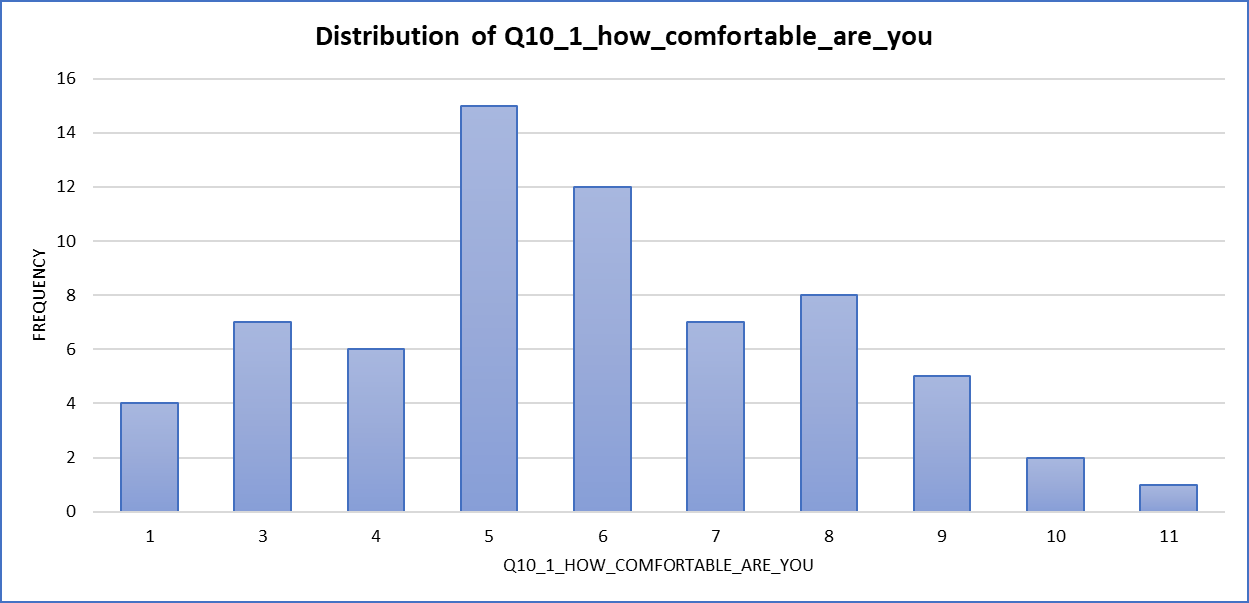
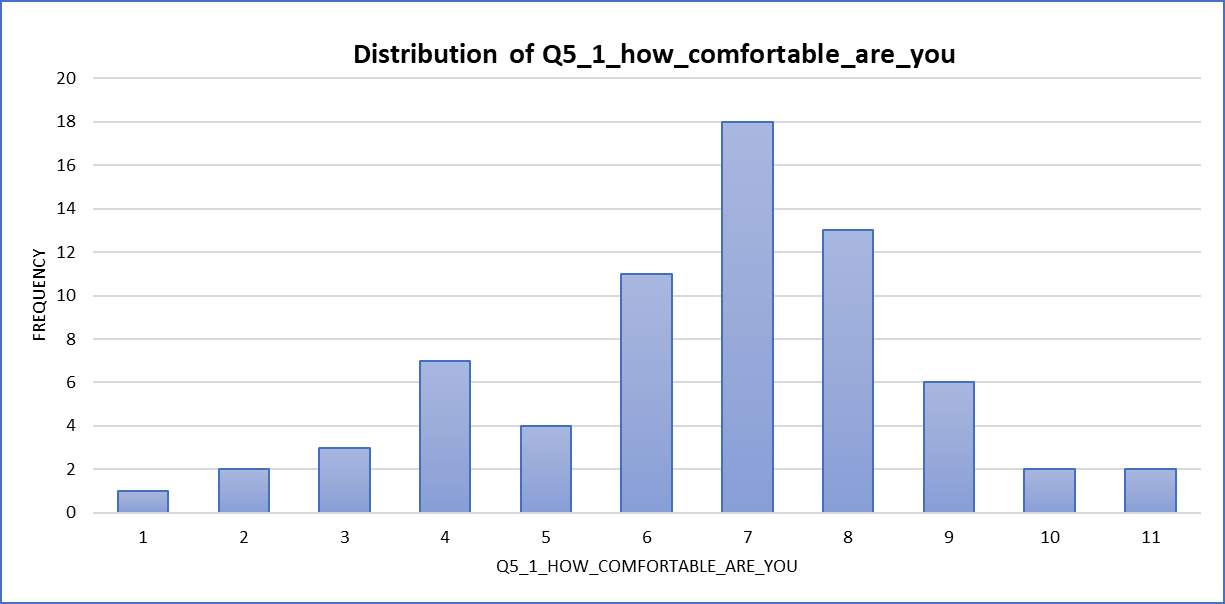
Prior to the simulation, the distribution of comfort levels were somewhat spread out, resembling a bell curve (Figure 1). While most respondents indicated a comfort level of 5 or 6, a noticeable number reported a very low comfort level of 1 (Table 3). The descriptive statistics for the pre-survey show a mean comfort level of 5.75 and a median of 6. This indicates that, on average, students felt only moderately comfortable before the intervention. Following the simulation, a clear upward shift in reported comfort levels is evident (Figure 2). The distribution in the post-survey shows that fewer individuals reported feeling uncomfortable. Many participants rated their comfort level higher, specifically at 6, 7, and 8. The descriptive statistics confirm this positive change, with the mean comfort level increasing to 6.58 and the median to 7 (Table 4). This demonstrates that, generally, students felt more comfortable working with aggressive patients after participating in the simulation.
| Item | N | NMiss | Mean | SD | Min | Max | Q1 | Median | Q3 |
|---|---|---|---|---|---|---|---|---|---|
| Comfort working with an aggressive patient | 67 | 0 | 5.75 | 2.27 | 1.00 | 11.00 | 4.00 | 6.00 | 7.00 |
| Training for psychological aggression | 67 | 0 | 5.30 | 2.20 | 1.00 | 11.00 | 4.00 | 6.00 | 7.00 |
| Ability to intervene physically | 67 | 0 | 5.40 | 2.54 | 1.00 | 11.00 | 3.00 | 5.00 | 7.00 |
| Self-assurance in the patient's presence | 67 | 0 | 5.37 | 2.39 | 1.00 | 11.00 | 4.00 | 5.00 | 7.00 |
| Ability to intervene psychologically | 67 | 0 | 5.51 | 2.29 | 1.00 | 11.00 | 4.00 | 5.00 | 7.00 |
| Training for physical aggression | 67 | 0 | 4.87 | 2.55 | 1.00 | 11.00 | 3.00 | 5.00 | 6.00 |
| Feeling safe around an aggressive patient | 67 | 0 | 4.58 | 2.46 | 1.00 | 11.00 | 3.00 | 5.00 | 6.00 |
| Effectiveness of known techniques | 67 | 0 | 5.07 | 2.17 | 1.00 | 10.00 | 3.00 | 5.00 | 7.00 |
| Ability to meet the patient's needs | 67 | 0 | 5.27 | 2.12 | 2.00 | 11.00 | 3.00 | 5.00 | 7.00 |
| Ability to protect yourself physically | 67 | 0 | 5.40 | 2.52 | 1.00 | 11.00 | 3.00 | 5.00 | 7.00 |
| Item | N | NMiss | Mean | SD | Min | Max | Q1 | Median | Q3 |
|---|---|---|---|---|---|---|---|---|---|
| Comfort working with an aggressive patient | 69 | 3 | 6.58 | 2.10 | 1.00 | 11.00 | 6.00 | 7.00 | 8.00 |
| Training for psychological aggression | 69 | 3 | 6.48 | 2.14 | 1.00 | 11.00 | 5.00 | 7.00 | 8.00 |
| Ability to intervene physically | 69 | 3 | 6.28 | 2.34 | 1.00 | 11.00 | 5.00 | 6.00 | 8.00 |
| Self-assurance in the patient's presence | 68 | 4 | 6.46 | 2.00 | 1.00 | 11.00 | 5.00 | 6.00 | 8.00 |
| Ability to intervene psychologically | 69 | 3 | 6.74 | 2.14 | 1.00 | 11.00 | 5.00 | 7.00 | 8.00 |
| Training for physical aggression | 69 | 3 | 6.30 | 2.29 | 1.00 | 11.00 | 5.00 | 6.00 | 8.00 |
| Feeling safe around an aggressive patient | 69 | 3 | 6.23 | 2.32 | 1.00 | 11.00 | 5.00 | 6.00 | 8.00 |
| Effectiveness of known techniques | 69 | 3 | 6.67 | 2.20 | 1.00 | 11.00 | 5.00 | 7.00 | 8.00 |
| Ability to meet the patient's needs | 69 | 3 | 6.62 | 2.12 | 1.00 | 11.00 | 5.00 | 7.00 | 8.00 |
| Ability to protect yourself physically | 69 | 3 | 6.42 | 2.35 | 1.00 | 11.00 | 5.00 | 6.00 | 8.00 |
Pairwise t-tests revealed statistically significant improvements across all ten measured aspects of comfort, training, and ability (all p < .001) demonstrating the effectiveness of the simulation. For every question, scores increased significantly from pre- to post-survey, with p-values well below the conventional threshold of .05 for statistical significance. These findings provide strong evidence that the simulation enhanced participants’ perceptions of comfort, training, self-assurance, and ability across all measured domains.
The simulation had a widespread and statistically significant impact on the participants' comfort level when working with aggressive patients (Q1). Similar results were found for question Q2 – Q10. The lower and upper bounds of the 95% confidence interval are positive, and this reinforces the findings of statistical significance. This means that the true average improvement for this question is greater than zero. In addition to this, the p < .05. This is a strong statistical finding that indicates that mean scores from pre- and post- simulation are highly unlikely to have occurred by random chance. This shows that the simulation had a statistically significant positive impact on the participants.
Further regression analysis explored the factors predicting comfort, showing that the pre-simulation model explained 57.39% of the variability in comfort with managing patient aggression, with physical intervention ability, self-assurance, and feeling safe as significant predictors. The post-simulation model exhibited a much stronger explanatory power, accounting for 86.77% of the variability, and revealed a shift in significant predictors to include perceived training in psychological and physical aggression, and ability to intervene psychologically, alongside sustained importance of physical intervention ability and self-assurance. These results highlight the substantial impact of simulation on enhancing comfort with managing patient aggression, not only by increasing overall explanatory power but also by shifting the predictors toward more comprehensive training and psychological intervention skills, underscoring the value of immersive learning in preparing healthcare students for complex clinical challenges.
Discussion
For prelicensure students preparing to enter clinical settings as novice members of the healthcare team, there is an urgent need for structured preparation in managing workplace violence within a collaborative, team-based context. Workplace violence events rarely occur in isolation; instead, they require coordinated responses across disciplines to ensure both patient and provider safety. Evidence suggests that novice clinicians often lack preparedness, situational awareness, and communication skills in high-stress situations, contributing to increased anxiety and delayed or less effective responses to aggression [23]. In this context, interprofessional education (IPE) offers a critical framework for equipping students with the competencies necessary to respond effectively as members of a coordinated care team.
Evidence-based de-escalation education, including verbal and nonverbal communication strategies, environmental awareness, and self-regulation, has been shown to reduce violent incidents and improve clinician confidence [4]. However, these skills are most effective when applied collaboratively, requiring clear communication, shared situational awareness, and coordinated intervention among healthcare team members. Early exposure to interprofessional training has been associated with increased resilience, reduced anxiety, and greater readiness to manage complex clinical interactions [12]. Furthermore, these competencies contribute to the development of a safer workplace culture, characterized by improved teamwork, reduced burnout, and enhanced retention among new graduates [17]. Preparing students to navigate workplace violence through an interprofessional lens is therefore essential to fostering both individual competence and team effectiveness.
The literature reinforces that students desire educational experiences that provide realistic preparation for clinical practice, including training in conflict resolution, communication, and strategies for responding to aggression [7,16]. Additionally, regulatory bodies such as The Joint Commission emphasize the importance of workforce training in violence prevention, crisis intervention, and reporting mechanisms [3]. The present study responds to these calls by integrating workplace violence training within an interprofessional simulation framework. Through this approach, learners are not only exposed to realistic clinical scenarios but also engage in shared problem-solving, role clarification, and collaborative communication, all of which are critical to safe and effective practice.
The findings of this study demonstrate that participation in an interprofessional high-fidelity simulation was associated with significant improvements in students’ confidence and perceived preparedness to manage aggressive patient behaviors. While increased confidence is an important outcome, these findings also suggest the development of broader interprofessional competencies. Regression modeling identified communication, de-escalation strategies, and self-assurance as key predictors of comfort levels, underscoring the interconnected nature of individual and team-based skills. Within an interprofessional context, these competencies are not developed in isolation but are reinforced through interaction, collaboration, and shared responsibility for patient care.
While prior research has demonstrated the effectiveness of simulation-based workplace violence training in improving preparedness and confidence among nursing students [2,15,19,22]; these studies have largely been limited to single-discipline cohorts. The present study extends this body of literature by incorporating an interprofessional approach, thereby more accurately reflecting the realities of clinical practice. Notably, this study includes respiratory therapy students, a group that has been underrepresented in workplace violence simulation research, further highlighting the value of inclusive, interprofessional training models.
Interprofessional training models support the development of essential competencies, including role understanding, team communication, and collaborative problem-solving. Evidence suggests that strong team cohesion and clear communication reduce the risk of escalation, improve situational awareness, and enable more efficient intervention during workplace violence incidents [20]. Through participation in structured interprofessional simulation, students are able to practice these skills in a controlled and psychologically safe environment, develop confidence in their teammates’ abilities, and reduce hesitation in high-pressure situations. This experiential learning approach helps to break down professional silos and fosters a culture of shared responsibility for patient and staff safety.
The findings of this study underscore the importance of embedding interprofessional workplace violence training within prelicensure curricula. By integrating simulation-based IPE, educational programs can better prepare students to function effectively within interprofessional teams, enhancing both individual competence and collective performance. Ultimately, such approaches have the potential to improve not only learner outcomes but also patient safety, team functioning, and organizational culture in clinical practice settings.
Strengths
This study had several notable strengths. Foremost was the use of a valid and reliable instrument to assess students’ confidence in managing patient aggression, ensuring accurate measurement of the variables of interest. The inclusion of interprofessional participants enhanced the realism and immersion of the simulation, improving the fidelity of team dynamics, and better reflecting the collaborative nature of hospital settings. This diversity also allowed for broader generalization of findings and richer data synthesis than would have been possible with a single-profession sample, such as nursing alone. Another strength was the use of emergency department registered nurses in the role of the patient’s family member. Their firsthand experience with verbal abuse at the bedside contributed to a more authentic and safe simulation environment, as they could draw on real-world scenarios to portray aggression realistically, while emphasizing the importance of staff safety and well-being.
Limitations
Despite these strengths, several limitations should be considered. The study was conducted at a single institution with a limited sample, potentially limiting generalizability. Although all students participated in prebriefing and debriefing, only a subset actively engaged in the simulation, while others served as observers, which may have resulted in differing learning experiences. Data were based on self-report measures and may be subject to response bias, including social desirability and overestimation of confidence. Additionally, awareness of being observed may have influenced participant behavior, which may mean that responses may not fully reflect authentic clinical practice. While the debriefing sessions explored students’ emotional responses and perceptions of teamwork, these variables were not formally or objectively measured, restricting the ability to draw conclusions about these important aspects of simulation-based learning. Lastly, the quasi-experimental pre–post design did not include long-term follow-up, limiting insight into the longevity of observed gains in knowledge, skills, and confidence over time.
Future research should incorporate multi-site designs with larger and more diverse samples to enhance generalizability. Increasing opportunities for active participation, or systematically comparing outcomes between active participants and observers, would provide valuable insight into the differential impact of simulation roles. The inclusion of objective outcome measures and qualitative methodologies could further enrich understanding of student experiences and learning processes. Finally, longitudinal follow-up is needed to assess the retention and transferability of skills and confidence into clinical practice over time.
Conclusion
Workplace violence continues to rise across healthcare settings, highlighting the need to prepare prelicensure students to respond effectively within interprofessional teams. This study demonstrated that an interprofessional high-fidelity simulation improved students’ confidence and preparedness in managing patient aggression while supporting the development of key interprofessional competencies. By engaging students from multiple disciplines in a psychologically safe environment, the simulation enhanced communication, role clarification, and collaborative decision-making. The inclusion of trained standardized patients enhanced realism and allowed learners to practice coordinated, team-based responses reflective of clinical practice. These findings extend prior research by demonstrating that interprofessional simulation not only builds individual confidence but also strengthens team-based skills essential for managing workplace violence. Integrating simulation-based interprofessional education into prelicensure curricula is critical to preparing future healthcare professionals to collaborate effectively in high-risk situations and to promote safer, more resilient healthcare environments.
References
- American Association of Critical-Care Nurses. (2019). AACN position statement: Zero tolerance for bullying, incivility, and verbal abuse. https://www.aacn.org/policy-and-advocacy/aacn-position-statement-zero-tolerance
- Andrews, K., Jefferson, L. L., & Wyckoff, E. (2024). Simulation: Preparing for workplace violence. American Nurse Journal. https://www.myamericannurse.com/simulation-preparing-for-workplace-violence/
- Arnetz, J. E. (2022). The Joint Commission’s new and revised workplace violence prevention standards for hospitals: A major step forward toward improved quality and safety. The Joint Commission Journal on Quality and Patient Safety. Advance online publication. https://doi.org/10.1016/j.jcjq.2022.02.001
- Carreras Tartak, J. A., Rodriguez, G., Schwid, M., Meeker, M. A., Thomas, M. D., Roy, H. J., Dadabhoy, F. Z., Molina, M., Chary, A., Bukhman, A. K., Im, D. D., Temin, E. S., & Macias-Konstantopoulos, W. L. (2025). Evaluating the feasibility and effectiveness of an interdisciplinary verbal de-escalation and implicit bias check training for agitation management in the emergency department. Risk Management and Healthcare Policy, 18, 1355–1366. https://doi.org/10.2147/RMHP.S513026
- Centers for Disease Control and Prevention, National Institute for Occupational Safety and Health. (2019). Occupational violence. https://www.cdc.gov/niosh/topics/violence/default.html
- Centers for Disease Control and Prevention. (2024, December). About workplace violence. https://www.cdc.gov/niosh/violence/about/
- Courtney-Pratt, H., Pich, J., Levett-Jones, T., & Moxey, A. (2018). “I was yelled at, intimidated and treated unfairly”: Nursing students’ experiences of being bullied in clinical and academic settings. Journal of Clinical Nursing, 27(5–6), e903–e912.
- Eppich, W., & Cheng, A. (2015). Promoting excellence and reflective learning in simulation (PEARLS): Development and rationale for a blended approach to health care simulation debriefing. Simulation in Healthcare, 10(2), 106–115. https://doi.org/10.1097/SIH.0000000000000072
- Hallett, N., Gayton, A., Dickenson, R., Franckel, M., & Dickens, G. L. (2023). Student nurses’ experiences of workplace violence: A mixed methods systematic review and meta-analysis. Nurse Education Today, 128, 105845. https://doi.org/10.1016/j.nedt.2023.105845
- Han, C. Y., Lin, C., Barnard, A., Hsiao, Y., Goopy, S., & Chen, L. C. (2017). Workplace violence against emergency nurses in Taiwan: A phenomenographic study. Nursing Outlook, 65(4), 428–435. https://doi.org/10.1016/j.outlook.2017.04.003
- Hopkins, M., Fetherston, C. M., & Morrison, P. (2018). Aggression and violence in healthcare and its impact on nursing students: A narrative review of the literature. Nurse Education Today, 62, 158–163. https://doi.org/10.1016/j.nedt.2017.12.019
- Hostetler, T. (2020). The comparative change of self-efficacy in nursing students after verbal descalation education. International Journal of Studies in Nursing, 5(1), 1–10. https://doi.org/10.20849/ijsn.v5i1.730
- International Nursing Association for Clinical Simulation and Nursing. (2025). Healthcare simulation standards of best practice. https://www.inacsl.org/healthcare-simulation-standards-ql
- Johnston, S., & Fox, A. (2020). Kirkpatrick’s evaluation of teaching and learning approaches of workplace violence education programs for undergraduate nursing students: A systematic review. Journal of Nursing Education, 59(8), 439–447. https://doi.org/10.3928/01484834-20200723-04
- Kausar, F., Ul Sabha, N., Sanam, T., Bibi, N., & Hussain, S. (2025). Perception and effectiveness of simulation-based training in preparing nursing students to handle workplace violence. Medtigo Journal of Medicine, 3(2), e30623222. https://doi.org/10.63096/medtigo30623222
- Kim, M., Kim, T., Tilley, D. S., Kapusta, A., Allen, D., & Cho, H. S. M. (2018). Nursing students’ experience of sexual harassment during clinical practicum: A phenomenological approach. Korean Journal of Women Health Nursing, 24(4), 379–391.
- Kim, S., Lynn, M. R., Baernholdt, M., Kitzmiller, R., & Jones, C. B. (2023). How does workplace violence–reporting culture affect workplace violence, nurse burnout, and patient safety? Journal of Nursing Care Quality, 38(1), 11–18. https://doi.org/10.1097/NCQ.0000000000000641
- Kowitlawakul, Y., Chow, Y. L., Salam, Z. H. A., & Ignacio, J. (2015). Exploring the use of standardized patients for simulation-based learning in preparing advanced practice nurses. Nurse Education Today, 35(7), 894–899. https://doi.org/10.1016/j.nedt.2015.03.004
- Martinez, A. J. S. (2019). Enhancing nursing students’ competency skills with a workplace violence nursing simulation: Translating knowledge into practice. SAGE Open Nursing, 5, 2377960819843696. https://doi.org/10.1177/2377960819843696
- Martins, J. C. A., Vaz de Sousa, A. C., Abrantes, A. R. D., Pinto, C. S. S., Gomes, C. I. A., Martins, D. J. O., Coutinho, V. R. D., Baptista, R. C. N., Oliveira, L. M. N., & Fernandes, M. I. D. (2017). Communication and leadership in emergency situations: Systematic literature review and recommendations for practice. Clinical Nursing Studies, 6(2), 55– 62. https://doi.org/10.5430/cns.v6n2p55
- May, D. D., & Grubbs, L. M. (2002). The extent, nature, and precipitating factors of nurse assault among three groups of registered nurses in a regional medical center. Journal of Emergency Nursing, 28(1), 11–17. https://doi.org/10.1067/men.2002.121835
- Ming, J. L., Huang, H. M., Hung, S. P., Chang, C. I., Hsu, Y. S., Tzeng, Y. M., Huang, H. Y., & Hsu, T. F. (2019). Using simulation training to promote nurses’ effective handling of workplace violence: A quasi-experimental study. International Journal of Environmental Research and Public Health, 16(19), 3648. https://doi.org/10.3390/ijerph16193648
- Najafi, B., & Nasiri, A. (2024). Concerns of novice nurses in the first year of work: A qualitative content analysis. SAGE Open Nursing. https://doi.org/10.1177/23779608241300019
- National League for Nursing. (2025). Structured simulation observer form. https://www.nln.org/
- Thackrey, M. (1987). Clinician confidence in coping with patient aggression: Assessment and enhancement. Professional Psychology: Research and Practice, 18(1), 57–60. https://doi.org/10.1037/0735-7028.18.1.57
- Truman, A., Goldman, M., Lehna, C., Berger, J., & Topp, R. (2013). Verbal abuse of pediatric nurses by patients and families. Kentucky Nurse, 61(1), 6–8.
- U.S. Bureau of Labor Statistics. (2020). Workplace violence in healthcare: Injuries, illnesses, and fatalities. https://www.bls.gov/iif/oshwc/cfoi/workplace-violence-healthcare-2018.htm
- U.S. Department of Labor. (2020). Workplace violence program. https://www.dol.gov/agencies/oasam/centers-offices/human-resources-center/policies/workplace-violence-program
- Zhao, S., Shi, Y., Sun, Z., Xie, F., Wang, J., Zhang, S., Gou, T., Han, X., Sun, T., & Fan, L. (2018). Impact of workplace violence against nurses’ thriving at work, job satisfaction and turnover intention: A cross-sectional study. Journal of Clinical Nursing, 27(13–14). https://doi.org/10.1111/jocn.14311
The submitted document
Submission PDF (32 pages) Full statistical analysis Repository